At the end of August we tackled a big Monterey Cypress (Macracarpa) dismantle in a small garden in Saltash. The garden was a small cottage garden at of an end terrace house, with very limited access due to a porch having been built on the path in an and out of the garden. There was also very little parking on the road. The garden backed on to a larger garden behind it, with better access but a long drag to the driveway where vehicles could be set up. Fortunately the school next door allowed us to access the tree from their side, the tree overhanging one of their playgrounds meant there was space that side to work. However there was still no access to the playground for vehicles so the best option was parking on the school field and bringing the branches out that way to be chipped and bringing all the timber that way also. The lack of vehicle access meant that the job became very labour intensive with the many, many logs needing to be cut small and wheelbarrowed down to the field to be loaded. Fortunately the route was downhill from the tree.
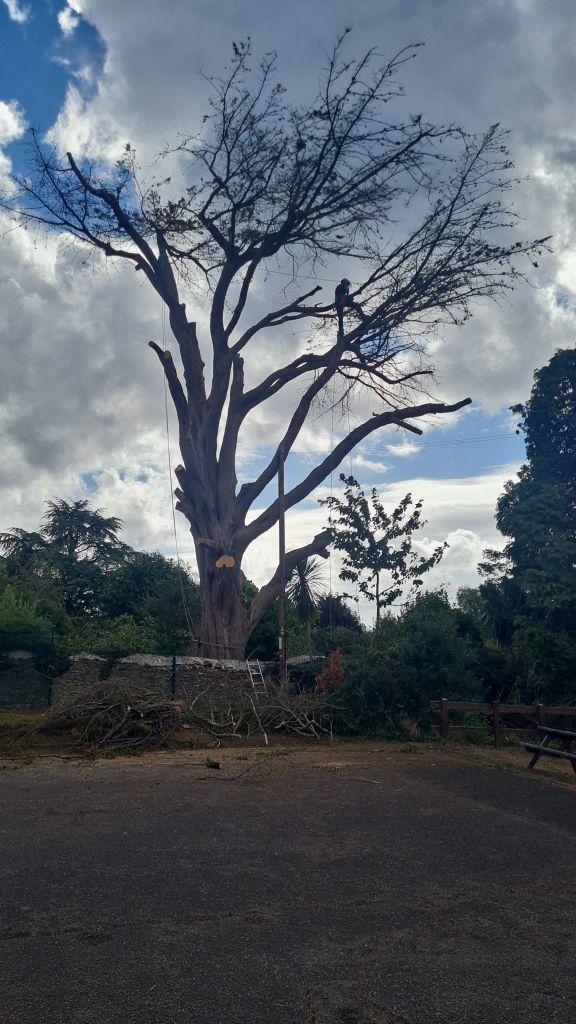
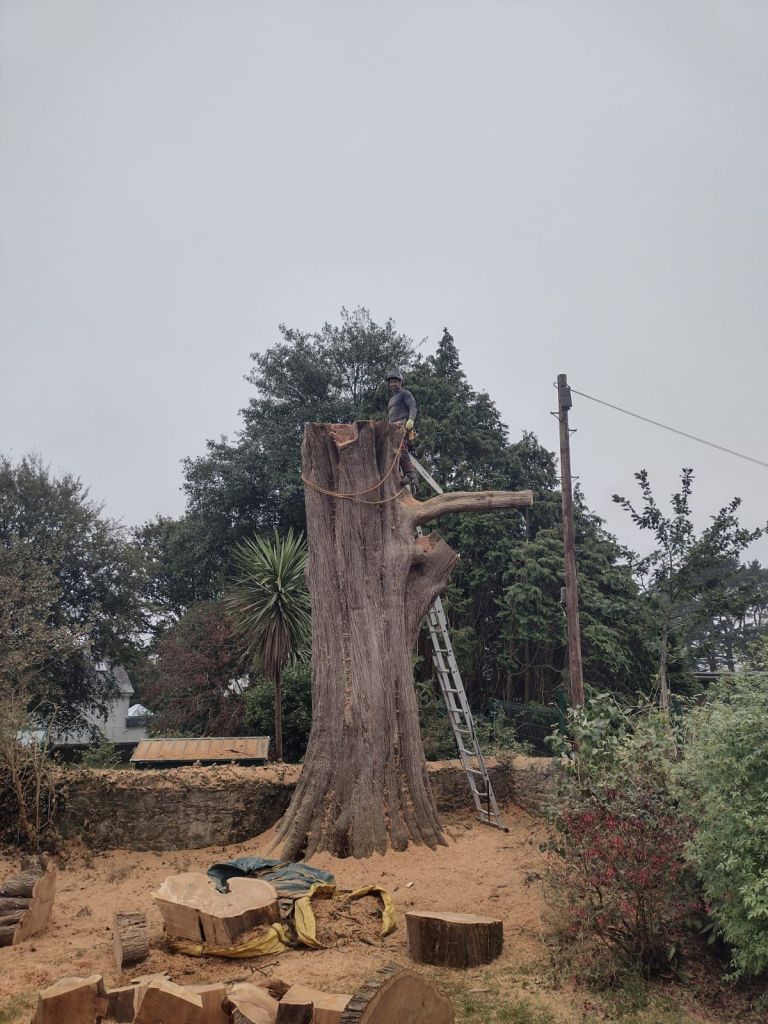
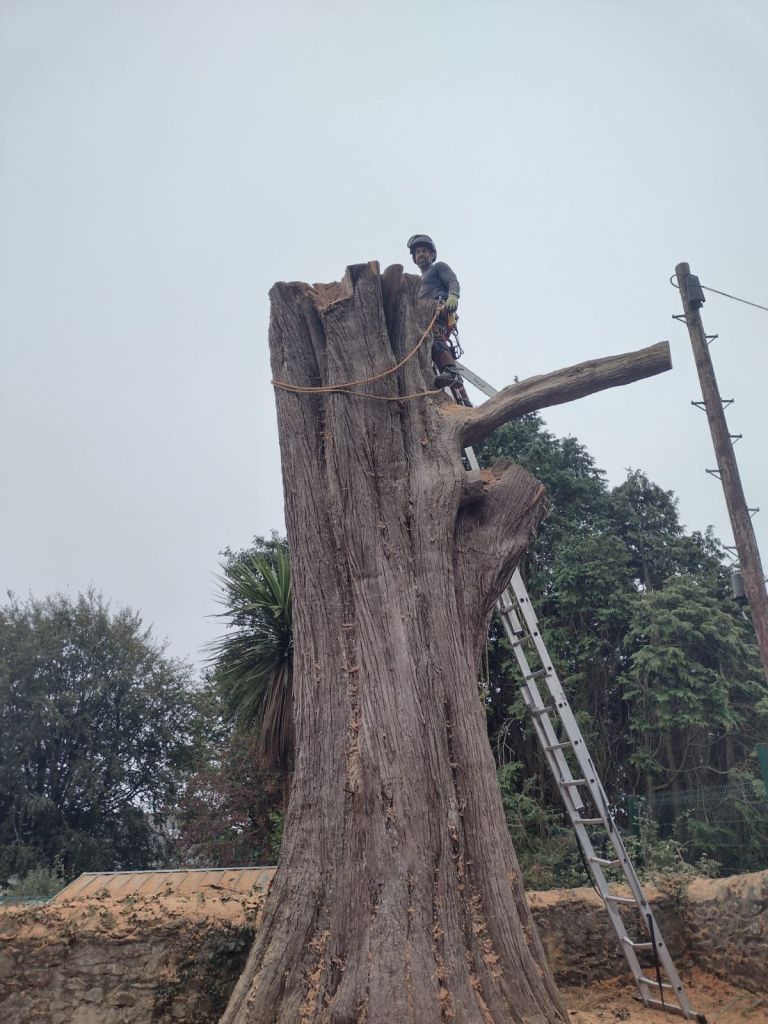
The tree itself was a complicated dismantle, with multiple targets beneath including prefab built school classrooms, stone walls of the gardens, sheds and most awkwardly a telegraph pole with phone lines. the tree itself was about 18metres tall with a spread of around 20metres with multiple heavy limbs and with the spread, it overhung 3 different gardens and the school grounds as well. At some point in the past the top had been removed from the tree and this is believed to have precipitated its decline, with the hot summer of 2026 speeding up the process. Honey fungus (a type of fungus that can actively decay the wood of the roots and the root collar) was also discovered around the tree, albeit in a small amount the previous autumn. There had also been a major branch lost around two and a half years ago, which is what had got me involved with the tree in the first place. Originally we had adopted a strategy of managing its decline, pruning to reduce weight and wind loading, to minimise the risk of further limb drop whilst maintaining as much living foliage on the tree as possible. But the increased amount of dieback and the presence of honey fungus prompted the owner to make the difficult decision to remove it. He did however request we leave it as a standing stem with a stubby side branch left for now, so that the grandkids can continue to enjoy their swing. This saved him some money in the short term as the amount of work in processing the remaining stem will be considerable and would have added significantly to the cost. At some point I suspect we will be back
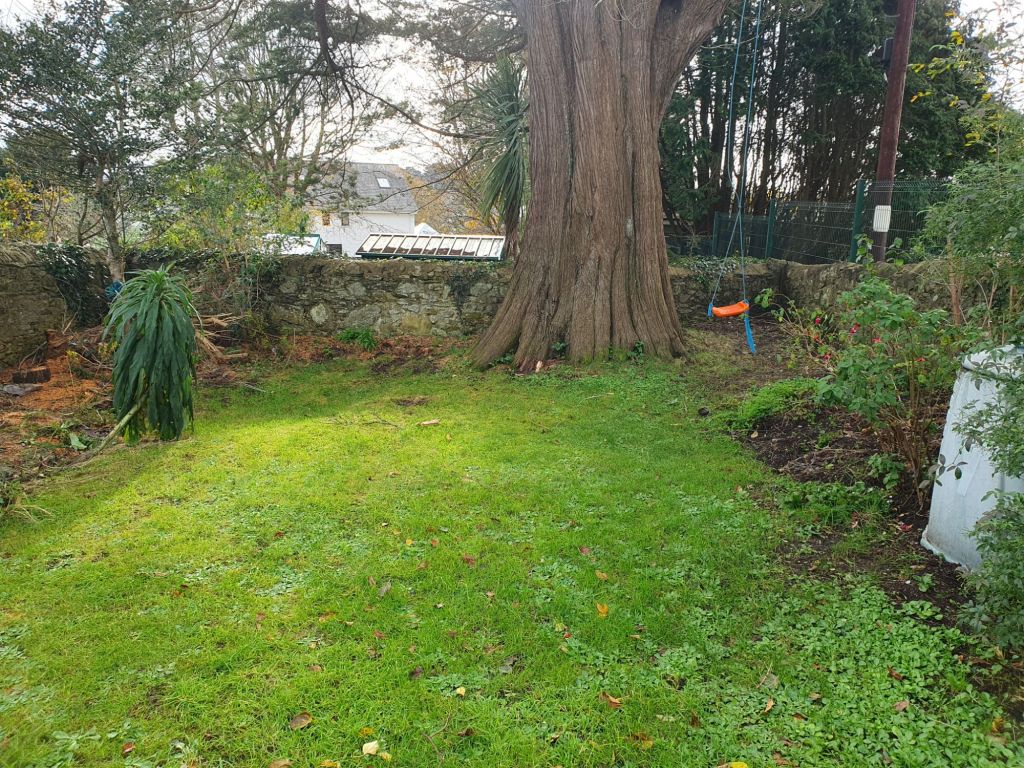
1.the garden with the tree on the first visit. Winter 2023.
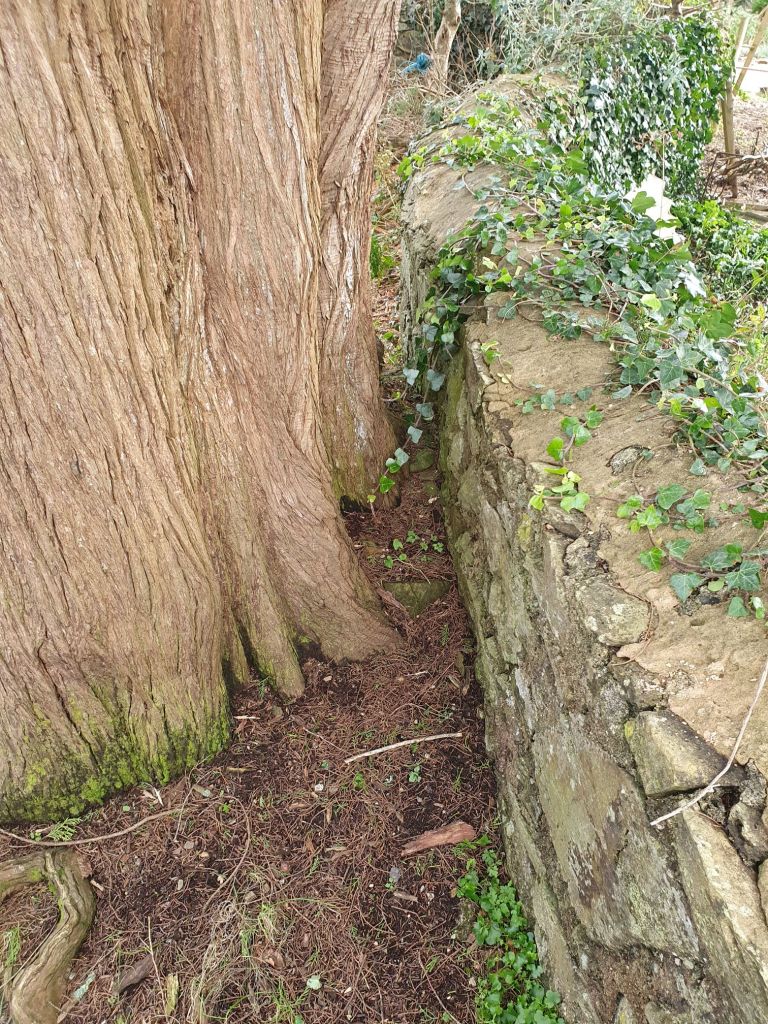
2.The base of the tree on the same occasion.
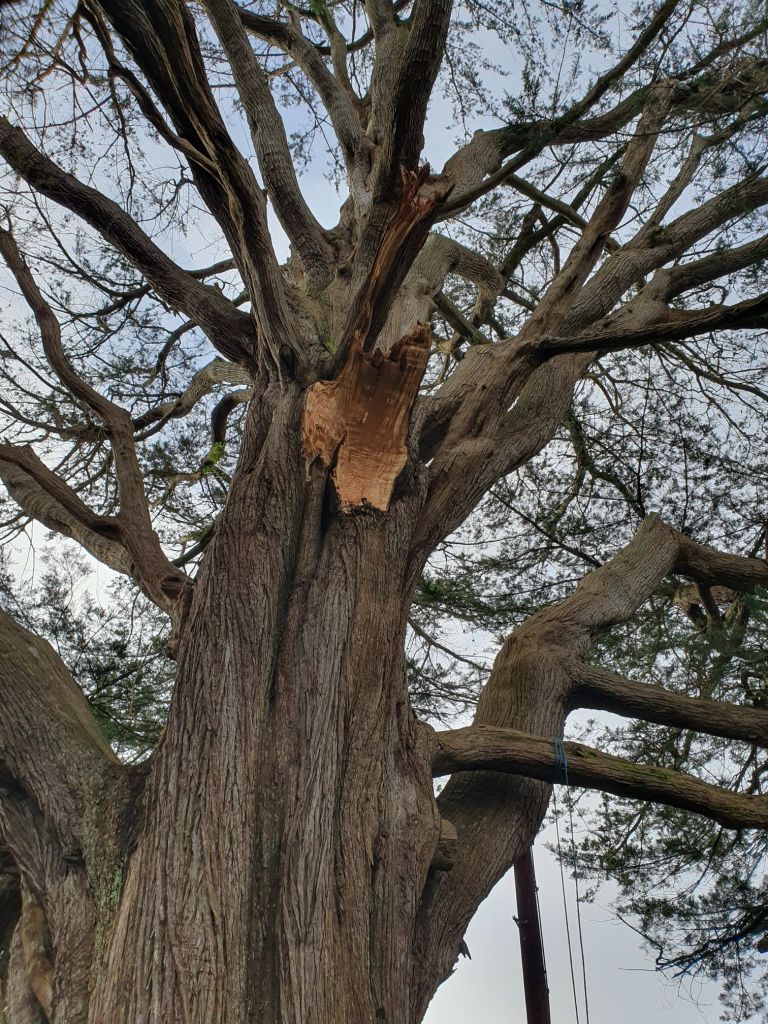
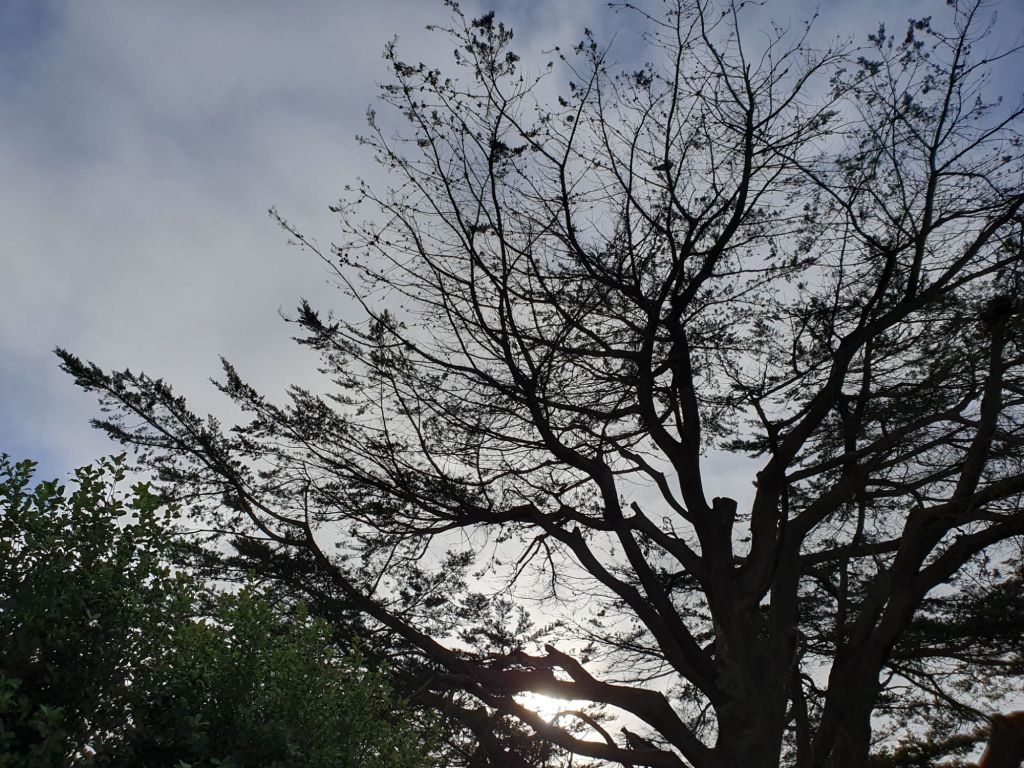
3. The wound created by the branch loss in 2023. 4. Crown of the tree in 2023.
5.Part way through the dismantle, from the school side. The telegraph pole is this side
6 & 7. Chogging down the tree to the required height. The ladder becomes useful at this stage as it takes some pressure off the feet – which have been in the climbing spikes for a while at this stage!

